Need urgent care in Bangkok? Call +66 62 674 6771 or WhatsApp +66 95 073 5550. Book now
Take Care Clinic, Sukhumvit Soi 13, Bangkok.
Strep throat hits suddenly with severe throat pain, fever, swollen tonsils, and tender lymph nodes in the neck, often without the cough or runny nose of a viral cold. At Take Care Clinic we test, diagnose, and treat strep throat in a single visit using rapid antigen testing, with antibiotics dispensed on site so you can start within minutes. Medically reviewed by Dr Ponlawat Pitsuwan, MD.
What Is Strep Throat?
Strep throat is a bacterial infection of the throat and tonsils caused by group A Streptococcus, also called Streptococcus pyogenes. It is one of the most common bacterial causes of sore throat, accounting for roughly 5 to 15 percent of adult throat infections and a higher share in school age children. The CDC notes that strep is highly contagious through respiratory droplets and contact, which is why we see clusters in hotel families, dive groups, and school staff in Bangkok. The infection often starts within two to five days of exposure and may present with severe throat pain on swallowing, fever above 38 degrees Celsius, swollen and painful lymph nodes under the jaw, white patches or pus on the tonsils, headache, and sometimes abdominal pain in children.
Diagnosis cannot rely on visual inspection alone. Even experienced doctors are wrong about half the time without a test, which is why both the Infectious Diseases Society of America and the National Health Service recommend rapid antigen testing or throat culture for any patient with features that fit. Distinguishing strep from a viral sore throat matters because antibiotics shorten the illness, reduce contagiousness within twenty four hours, and prevent the rare but serious complications of rheumatic fever, kidney inflammation, and peritonsillar abscess.
How We Diagnose Strep at Take Care Clinic
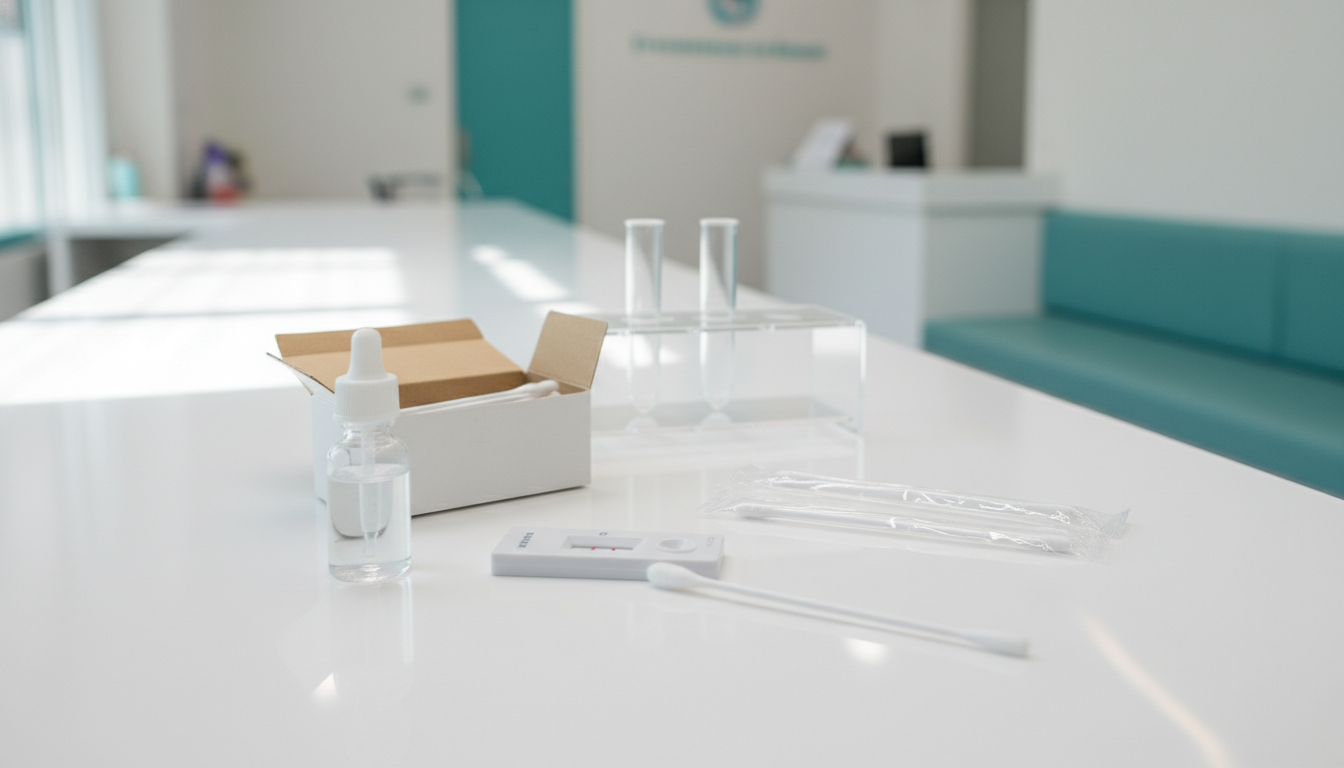
Our diagnostic approach starts with a careful clinical history and physical examination. We assess the Centor criteria, which include fever, absence of cough, tender anterior cervical lymph nodes, and tonsillar exudates. A patient with three or four positive criteria has a much higher probability of strep, and we move directly to testing. The rapid strep antigen test uses a quick throat swab, gives a result within ten minutes, and has a sensitivity of around 85 to 95 percent in adults. A positive rapid test is enough to confirm strep and start treatment. A negative rapid test in adults is reliable enough to skip antibiotics; in children we may add a back up throat culture, which takes one to two days but improves sensitivity for the smaller bacterial loads more common in pediatric infections.
Additional bedside tests we may run include a temperature check, throat photograph for documentation, and, where the clinical picture is unclear, a quick saliva COVID and flu test to rule out concurrent viral infection. If we suspect glandular fever, an atypical bacterial cause, or an emerging abscess we add a brief mononucleosis spot test and refer to a partner hospital for further imaging or ENT review.
Treatment Plan and Medication
For confirmed strep we use a ten day course of penicillin V or amoxicillin as first line therapy. Both are inexpensive, safe in pregnancy, and effective against group A Streptococcus. The NHS and CDC continue to recommend this regimen because group A strep has not developed widespread resistance to penicillin. Children may receive amoxicillin once daily, which improves compliance over the ten day course. Patients with penicillin allergy receive a five day course of azithromycin or a ten day course of clindamycin or cephalexin, depending on the severity of the allergy and local resistance patterns.
Alongside the antibiotic we treat the symptoms aggressively. Paracetamol and ibuprofen provide reliable pain relief within an hour. Warm salt water gargles, throat lozenges containing benzocaine or hexylresorcinol, and adequate hydration speed recovery. We advise patients to rest for the first forty eight hours, avoid sharing utensils, and replace their toothbrush at the start and end of antibiotic therapy. Most patients feel substantially better within twenty four to forty eight hours of starting antibiotics. The Cochrane review confirms that the ten day course is the standard duration that gives the lowest relapse rate.
If your symptoms include severe pain that limits swallowing, voice changes, neck swelling, or trouble opening the mouth, we move quickly to evaluate for peritonsillar abscess. These cases need same day ENT referral for drainage. Take Care Clinic has established same day referral pathways with Bumrungrad, Samitivej, BNH, and MedPark hospitals.
Strep Throat in Travelers and Expats
Travelers and expats in Bangkok face a few specific risks. Long haul flights compromise mucosal immunity, hotel air conditioning dries the airways, and dense tourist zones such as Sukhumvit and Asok lead to high droplet exposure. Family travelers often see the infection move through hotel rooms within days. If one family member has confirmed strep, others with throat symptoms should be tested. Asymptomatic carriers usually do not need treatment, but symptomatic household contacts often benefit. We provide a clear contact tracing plan and can test additional family members or colleagues at the same visit, including via our hotel visit service.
Hotel Visit for Strep Throat
If fever, throat pain, and exhaustion make leaving your hotel difficult, our doctor hotel visit service brings the consultation, rapid strep test, and antibiotic dispensing to your room. We cover all major Sukhumvit, Silom, Sathorn, Riverside, and Asok hotels, usually arriving within sixty to ninety minutes. The doctor carries rapid strep kits, paracetamol, ibuprofen, antibiotics including penicillin and macrolide options, IV fluids when needed, and a thermometer. Insurance paperwork and fit to fly letters can be issued on the spot.
Related Pages
For a broader differential of throat pain see our sore throat treatment page, which covers viral and non bacterial causes. For sinus drip mimicking a throat infection see sinus infection treatment. For flu that often starts with throat pain see flu symptoms treatment and our coverage of upper respiratory tract infection. Ear pain alongside strep is covered at ear infection treatment. High fever workup is at fever treatment, and a productive cough at bronchitis treatment. If the sore throat followed a recent oral exposure see also STI testing.
Cost, Insurance, and Documentation
Our pricing for a strep throat consultation including the rapid antigen test is well below private hospital outpatient fees and is dispensed in a single visit. Itemised English medical receipts meet documentation requirements for Cigna, Allianz, AXA, April, Bupa, IMG, GeoBlue, World Nomads, SafetyWing, and most major insurers, and we can bill some policies direct on request. A fit to fly letter can be issued once you have started treatment and your fever has settled, which is usually within forty eight hours.
When You Need to Move Faster
Call us the same day if you have a fever above 38.5 degrees Celsius for more than forty eight hours, difficulty swallowing your own saliva, voice muffling, neck swelling, drooling, or a stiff neck. These features can signal a peritonsillar abscess, severe strep, or rarely epiglottitis, all of which need urgent management. Children with high fever, refusal to drink, or a rash should be reviewed the same day to rule out scarlet fever and other complications.
Frequently Asked Questions
Can I be seen in my hotel room? Yes. Our doctor hotel visit service covers Sukhumvit, Silom, Sathorn, Riverside, and surrounding districts. The doctor brings rapid strep testing, antibiotics, paracetamol, and IV fluids, and issues insurance paperwork on the spot.
Will my travel insurance cover this? Most international travel insurers reimburse acute care for strep throat. We issue itemised English receipts that meet documentation standards for Cigna, Allianz, AXA, April, Bupa, IMG, GeoBlue, World Nomads, and SafetyWing. We can also bill some policies direct.
How quickly will I feel better? Most patients feel substantially better within twenty four to forty eight hours of starting the correct antibiotic. The full course is ten days even if you feel better earlier, because stopping early raises the risk of relapse and complications such as rheumatic fever.
Are children with strep treated the same way? Children receive weight based amoxicillin once daily for ten days, which improves compliance. Younger children may also need a back up throat culture if the rapid test is negative and clinical suspicion remains high.
Can I fly while on antibiotics? Yes, once you have started treatment, your fever has settled, and you can swallow comfortably. We issue fit to fly letters at the visit when needed.
Citations
CDC. About Strep Throat.
Infectious Diseases Society of America. Group A Streptococcal Pharyngitis Guidelines.
NHS. Sore Throat and Strep Throat.
Mayo Clinic. Strep Throat: Diagnosis and Treatment.
Cochrane. Antibiotics for sore throat.
World Health Organization. Rheumatic Heart Disease.
Medically reviewed by Dr Ponlawat Pitsuwan, MD.
Need urgent care in Bangkok? Call +66 62 674 6771 or WhatsApp +66 95 073 5550. Book now
Take Care Clinic, Sukhumvit Soi 13, Bangkok.