Need urgent care in Bangkok? Call +66 62 674 6771 or WhatsApp +66 95 073 5550. Book now
Take Care Clinic, Sukhumvit Soi 13, Bangkok.
A clean, properly dressed wound heals two to three times faster than one left open to Bangkok’s heat and humidity, and the difference between a small scab and a full-blown skin infection often comes down to whether someone professional looked at it within the first 48 hours. At Take Care Clinic on Sukhumvit Soi 13, our medical team provides daily wound dressing changes, surgical wound care, burn dressings, post-operative dressings, and chronic wound management for residents, expats, and travelers, with same-day walk-ins and hotel visits across central Bangkok.
Whether you have just had stitches at a hospital and need them dressed every two days, you have a scooter graze that will not stop oozing, you are recovering from minor surgery and your home country’s GP is too far away, or you are managing a chronic ulcer that needs sterile dressing technique, we provide the full range of professional wound dressing services in a clean clinical setting at predictable, transparent prices.
What is included in a professional wound dressing service?
Every dressing visit at our clinic includes a focused medical assessment of the wound by a doctor or trained nurse, gentle removal of the previous dressing, cleaning of the wound bed with sterile saline or appropriate antiseptic, debridement of any dead tissue when needed, application of the correct primary dressing for that wound type, a secondary protective dressing, and clear written instructions on when to return and what to watch for. We document the wound with measurements and photographs at each visit so we can track healing objectively.
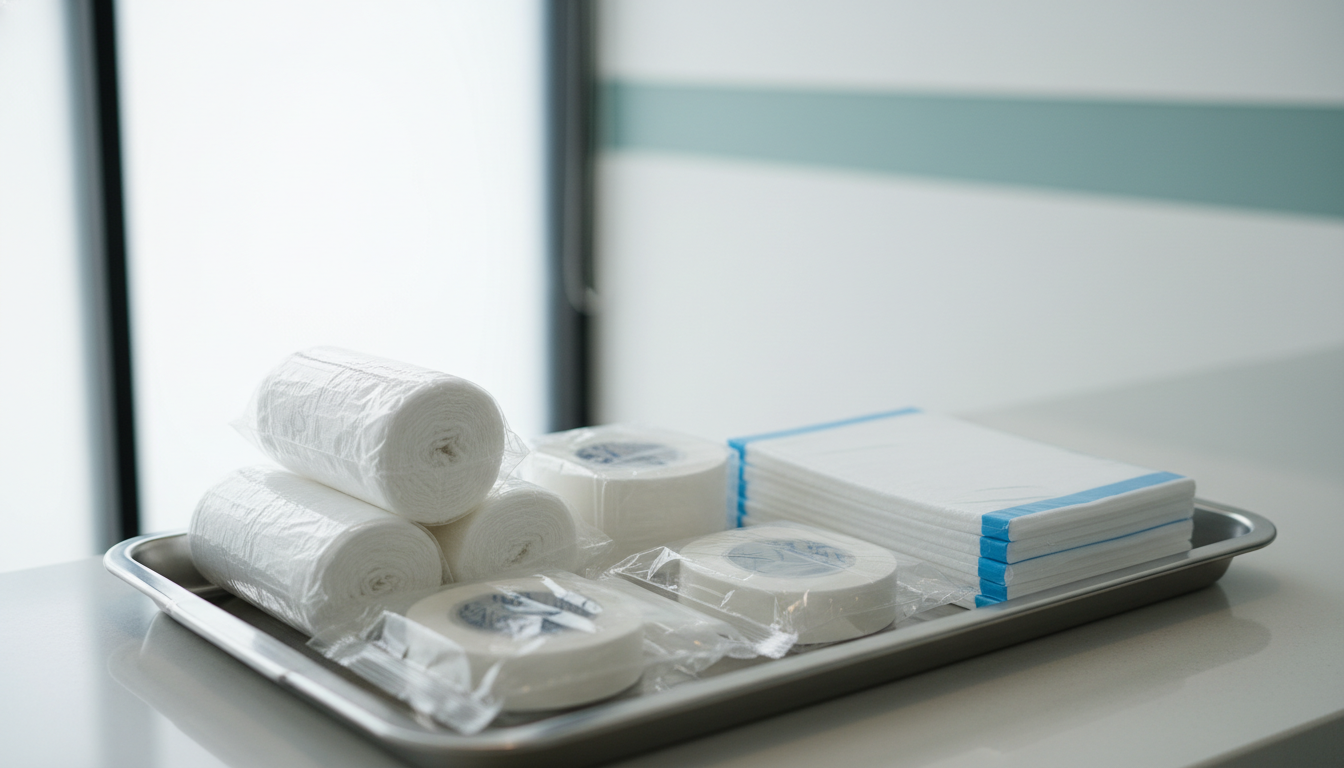
The dressing materials we use are chosen for the wound, not the bill. Modern dressings include hydrocolloids for superficial abrasions and stage 1 to 2 pressure injuries, foams for moderate to heavy exudate, alginates for bleeding wounds, hydrogels for dry necrotic tissue, silver-impregnated dressings for infected or high-risk wounds, and silicone interfaces for fragile skin. We carry the full range so we can match the dressing to the wound on the day rather than send you to a pharmacy with a list.
Wounds we commonly dress at our Bangkok clinic
Post-surgical wounds
If you have had any kind of operation recently, whether locally or back home, regular dressing changes by a clinician reduce surgical site infection and shorten healing time. We handle abdominal, orthopaedic, plastic-surgery, dental, and minor day-surgery wounds. Clean dry surgical incisions can often be left under a transparent film for several days; wounds with exudate, drains, or sutures benefit from professional dressing every two to three days. We also do suture removal when the time comes.
Lacerations and abrasions
Scooter and motorbike road rash is one of the most common wounds we see in Bangkok and Phuket travelers. These wounds need careful cleaning to remove embedded grit, debridement of dead skin, infection prevention, and frequent dressing changes for the first week. We provide the full service including a tetanus booster if needed. For deeper or larger wounds, our doctors suture or apply Steri-Strips and skin glue at the first visit.
Burns
Partial-thickness burns from hot oil, motorbike exhaust, or kitchen accidents need dressing in a way that keeps the wound moist, prevents infection, controls pain, and allows skin regeneration. We use hydrogels, silver foam dressings, or specialized burn dressings depending on the depth and location. Deeper burns or any burn over 10 percent of body surface area need hospital admission and we coordinate transfer.
Chronic wounds and ulcers
Pressure injuries, venous leg ulcers, arterial ulcers, and diabetic foot ulcers all benefit from a structured wound care plan rather than ad-hoc home dressings. Our team manages chronic open wounds in close coordination with vascular specialists, endocrinologists for blood-sugar optimization, and physiotherapists where appropriate. Compression therapy, offloading footwear, and risk assessment are part of the recovery plan.
Animal and human bite wounds
Bites are high-risk for infection and need specific cleaning, debridement, and antibiotic strategy. We coordinate this with animal bite treatment and rabies vaccination protocols when needed.
Infected wounds
If the skin around your wound is red, hot, painful, swelling, or producing pus, we treat it as a potential cellulitis or wound infection. We swab for culture, start empirical oral antibiotics covering MRSA when appropriate, and use silver or honey-impregnated dressings to reduce bacterial load. Severe infections may need intravenous therapy and hospital admission.
How often should a wound be dressed?
The answer depends on the wound, the amount of exudate, and the type of dressing. Many surgical wounds are dressed every two to three days. Moderately exuding wounds may need daily dressing. Highly absorbent foam or alginate dressings can sometimes be left in place for three to five days if the seal stays intact. Heavily infected wounds may need daily or twice-daily review during the early treatment phase.
We schedule follow-up appointments at each visit so you know when to come back. Patients who travel often want to space visits to fit their schedule, and we provide written home-care instructions and dressing supplies so you can manage one or two days between professional changes if appropriate. Hotel visits are an excellent option for daily dressing during a short trip.
Hotel and home wound dressing visits
Many of our patients prefer wound dressing in their hotel room or condominium rather than at the clinic, especially after surgery, in the days immediately following an accident, or for older patients with mobility issues. Our doctors and nurses visit anywhere in central Bangkok carrying a complete sterile dressing kit, antiseptics, dressings of all types, and any medication needed. The visit takes 30 to 60 minutes depending on the wound, and we leave clear written instructions for between visits.
Coverage includes Sukhumvit, Silom, Sathorn, Asoke, Phrom Phong, Thong Lo, Riverside, Bang Rak, and most of central Bangkok. We will also travel further on request for daily wound care.
Wound healing in Bangkok’s climate
Heat and humidity in Bangkok work both for and against wound healing. The warm environment increases blood flow and can accelerate granulation tissue, but humidity raises sweat under occlusive dressings and dramatically increases the risk of bacterial colonization, particularly with Pseudomonas and Staphylococcus aureus. Open wounds left uncovered in the tropics often get a yellow film of pus within a day. The right dressing strategy in Bangkok is to keep the wound moist enough for healing but with enough absorbency to handle exudate, and to change frequently if seals fail or odor develops.
Swimming, sauna, scooter dust, and sunscreen residue all need to be considered. We give clear advice on showering (yes, with the right waterproof cover), swimming (no for most open wounds), and sun protection of healing skin to reduce scarring. Patients with diabetes or vascular disease are managed with extra vigilance because their healing is slower and infection risk higher.
Cost and insurance
Wound dressing visits are charged per visit, with transparent pricing for clinic and hotel-visit options. The cost includes the consultation, all dressings used, debridement if needed, and the medical report. We provide English-language receipts and ICD-10-coded medical reports that work for all major international travel and expat insurance policies. Direct billing is available for several insurers if you contact them in advance, and we are happy to assist with the paperwork. Patients without insurance routinely find our wound care fees are a fraction of equivalent private healthcare costs in their home country.
What to bring or tell us
If your wound was originally treated at another clinic or hospital, bring any operative report, discharge note, list of medications, and details of when stitches or staples need to come out. If you have a known allergy to any dressing, antiseptic, or antibiotic, please tell us before we open the kit. If you have diabetes, are on blood thinners, or have any other condition that affects healing, this helps us choose the right dressing and the right antibiotic if needed.
Signs your wound needs urgent review
Return to the clinic the same day, or contact us by phone, if you notice any of the following: increasing redness, warmth, or swelling around the wound; pus or unpleasant odor; spreading red streaks up the limb; fever, chills, or feeling generally unwell; bleeding that will not stop with ten minutes of pressure; numbness, severe pain, or loss of function in the area; a wound that is reopening; or any concerns about the dressing coming loose. Early intervention prevents minor complications from becoming serious.
Related services
Professional wound dressing often goes hand-in-hand with several other services we provide. See also our pages on suture removal, cellulitis treatment, accident and trauma care, insect bite treatment, animal bite treatment, skin rash, IV drip therapy, and doctor hotel visits.
Frequently asked questions
Can I have a dressing change at my hotel?
Yes. Hotel visits in central Bangkok are available seven days a week. Our team brings a full sterile kit and all dressing materials. Most patients prefer this option after surgery or when they have a daily dressing schedule during a short trip.
Will my travel or expat insurance cover wound dressings?
Most international travel and expat policies cover consultations, dressings, and any medication needed for wound care after an accident or surgery. We provide itemized English receipts and ICD-10-coded medical reports. Direct billing is available for several major insurers if you contact them in advance.
How long do most wounds take to heal?
Superficial abrasions usually heal in seven to fourteen days. Sutured wounds typically have stitches removed at five to fourteen days depending on the body location. Surgical wounds reach a strong scar at six weeks. Chronic wounds and ulcers can take weeks to months and need careful planning.
What if I have stitches that need removing while I am traveling?
We do same-day suture removal across central Bangkok and our doctors visit your hotel on request. Bring the discharge note from the clinic or hospital that placed the stitches so we know the timing and exact technique used.
Can my wound get wet in the shower?
It depends on the wound and the dressing. Many modern dressings have a waterproof film outer layer that allows showering, and we usually advise short showers with the wound facing away from the spray. Submerging an open wound (bath, pool, sea) is almost never appropriate during the early healing phase.
Do you treat chronic ulcers and slow-healing wounds?
Yes. We manage diabetic foot ulcers, venous leg ulcers, pressure injuries, and other chronic wounds with structured wound care plans and coordinate with vascular, endocrinology, and physiotherapy specialists as needed.
References
- World Health Organization. Global Guidelines for the Prevention of Surgical Site Infection. WHO 2018.
- National Institute for Health and Care Excellence. Surgical Site Infections: prevention and treatment. NICE NG125.
- Wounds International Consensus Document on Wound Bed Preparation. Wounds International.
- Lipsky BA et al. IDSA Clinical Practice Guideline for Diabetic Foot Infections. IDSA.
- NHS. Cuts and grazes. NHS UK 2024.
- Mayo Clinic. Wound Care: How to Care for an Open Wound or Sore. Mayo Clinic 2024.
Medically reviewed by Dr Ponlawat Pitsuwan, MD.
Need urgent care in Bangkok? Call +66 62 674 6771 or WhatsApp +66 95 073 5550. Book now
Take Care Clinic, Sukhumvit Soi 13, Bangkok.