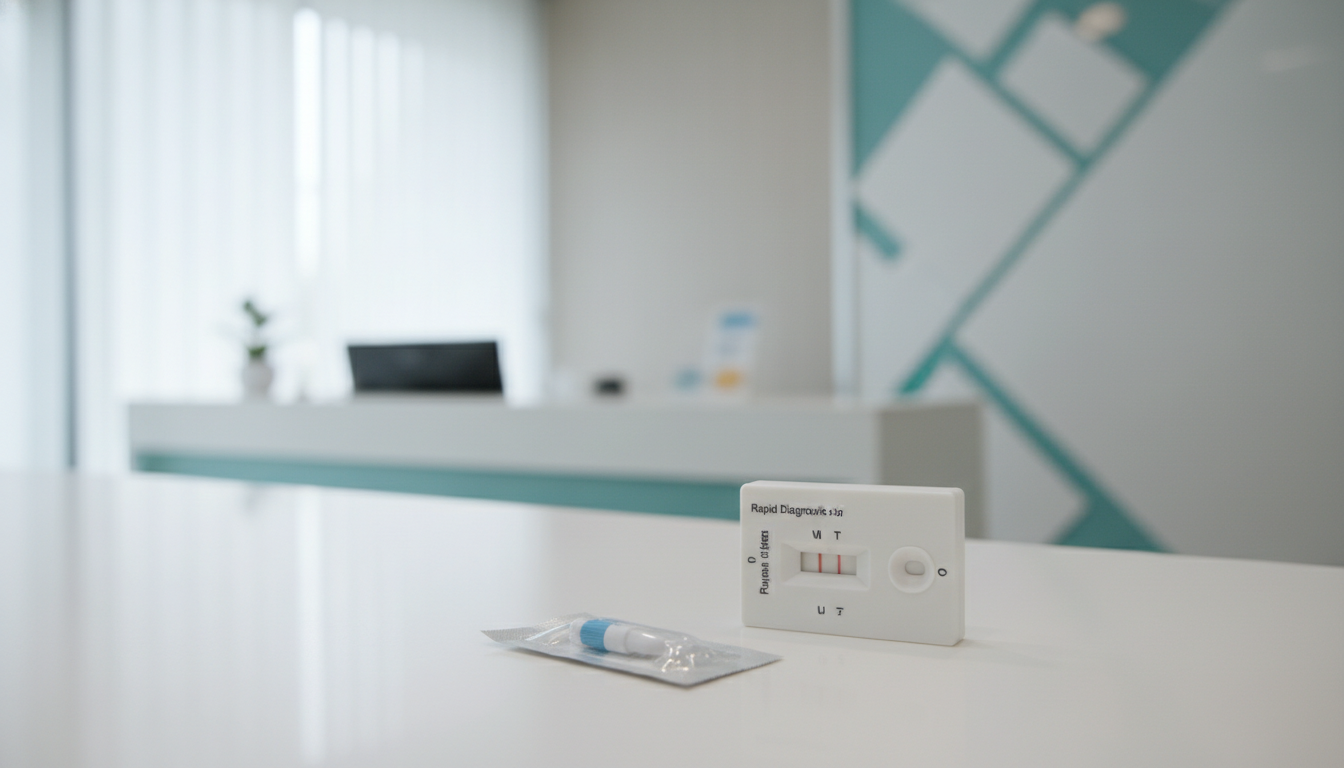
An HIV test in Bangkok is fast, confidential, and inexpensive — and modern testing can give you a reliable answer within weeks of a possible exposure rather than the months people sometimes still imagine. At Take Care Clinic on Sukhumvit Soi 13, our English-speaking team offers rapid 20-minute HIV finger-prick testing for immediate reassurance, lab-based fourth-generation antigen-antibody testing for higher accuracy in the early window, and HIV RNA PCR for the rare situations where it changes the management. Results are interpreted by a doctor, with clear written follow-up and support for what to do next whatever the result.
Book an HIV Test Today in Bangkok
Same-day rapid testing at the clinic or discreet hotel-visit testing across central Bangkok. Confidential, fast, doctor-led.
Phone: +66 62 674 6771
WhatsApp: +66 95 073 5550
Clinic: Take Care Clinic, Sukhumvit Soi 13, Khlong Toei, Watthana, Bangkok 10110
Types of HIV Test and When Each Is Useful
Three HIV test categories cover most situations. The rapid finger-prick antibody test uses a drop of blood from a fingertip and gives a result in about 20 minutes. It detects HIV antibodies, which form 3–12 weeks after exposure. Useful for routine screening when the last possible exposure was at least three months ago, and for immediate reassurance during the visit. Not the right test for a possible exposure last week — the window has not closed.
The fourth-generation antigen-antibody combination test is the lab-based standard. It detects both HIV antibodies and the p24 antigen (a viral protein that appears earlier), shortening the window period to roughly 2–4 weeks after exposure. Results come back within 24–48 hours. This is the right test for anyone with a possible recent exposure who wants the earliest reliable answer.
HIV RNA PCR detects the virus’s genetic material directly and can turn positive as early as 10–14 days after exposure. It is more expensive and reserved for specific situations: acute retroviral syndrome symptoms, very recent high-risk exposure where waiting for the standard test is not appropriate, infants born to HIV-positive mothers, and confirmation of equivocal antibody/antigen results. We use it when it changes the management, not as a routine screen.
Window Periods, Explained Briefly
The window period is the lag between an HIV exposure and when each test can reliably detect the infection. Modern fourth-generation tests detect 95%+ of infections by 4 weeks after exposure and essentially all by 6 weeks. Rapid antibody tests are reliable from about 3 months. RNA PCR detects from about 10–14 days. We tell you straight what your test can rule out and what it cannot — testing too early and walking away reassured is the worst outcome.
If You Had a Possible Exposure in the Last 72 Hours
HIV post-exposure prophylaxis (PEP) is a 28-day course of antiretrovirals that prevents HIV infection if started within 72 hours of a high-risk exposure — ideally within 24 hours. Earlier is better. If you had unprotected sex with a known-positive partner, a condom break in a high-risk encounter, sharing of needles, or any similar exposure in the last three days, contact us urgently rather than waiting for a test. PEP plus baseline testing is the right combination. Full detail on PEP dosing, side effects, and follow-up testing is on our PrEP and PEP medication page.
If You Are at Ongoing Risk: PrEP
HIV pre-exposure prophylaxis (PrEP) is a daily pill taken by HIV-negative individuals at ongoing risk. It reduces transmission risk by over 99% when taken as prescribed. We initiate PrEP after baseline HIV testing, kidney function, and hepatitis B status, then review patients quarterly. PrEP is generic in Thailand, costs about 1,500 THB per month, and is a sensible option for anyone with multiple partners, a partner of unknown HIV status, or other ongoing exposure risk.
What Happens If the Test Is Positive
A positive screening test always triggers a confirmatory laboratory test before any diagnosis is finalised — false positives are uncommon but they do occur. If the result is confirmed, modern HIV is a controllable chronic condition. Started early, antiretroviral therapy preserves immune function indefinitely; effectively treated patients have normal life expectancy and (when virally suppressed) cannot transmit HIV sexually — known as U=U, undetectable equals untransmittable. We do not provide long-term HIV care in our general clinic, but we coordinate referral to specialist Bangkok HIV services and support patients through the early steps. We also test concurrently for other STIs that often co-occur — see the broader STD test panel and the STD treatment overview.
Confidentiality and Hotel Visits
HIV testing is confidential. Records are accessible only to treating clinicians. Results are sent on secure channels and worded so a casual observer cannot tell what they relate to. Receipts can be issued without diagnostic codes. For maximum privacy, our doctor hotel visit service brings HIV testing — rapid finger-prick or lab sample collection — to your hotel room anywhere in central Bangkok, with results returned via the same secure channels.
HIV Test Costs in Bangkok
HIV testing in Bangkok is significantly less expensive than in most Western countries. Rapid finger-prick HIV testing is 500 to 1,000 THB. Fourth-generation lab test is 1,500 to 2,500 THB. HIV RNA PCR is 4,000 to 8,000 THB. A combined HIV plus syphilis plus hepatitis B/C screen is in the range of 3,000 to 5,000 THB. PrEP is around 1,500 THB per month for generic medication; PEP is 4,000 to 8,000 THB for a 28-day course plus baseline tests. Hotel visit fees add 2,000 to 3,000 THB. Travel and expatriate insurance commonly covers medically indicated HIV testing; we provide itemised English-language receipts or discreet alternatives on request.
Book an HIV Test Today in Bangkok
Same-day appointments at the Sukhumvit clinic or discreet hotel-visit testing across central Bangkok. Rapid 20-minute results or lab-grade fourth-generation testing.
Phone: +66 62 674 6771
WhatsApp: +66 95 073 5550
Frequently Asked Questions
How accurate is the rapid HIV finger-prick test?
Modern rapid antibody tests are highly accurate (>99%) once the window period has closed (at least 3 months from possible exposure). They are less useful for very recent exposures because antibodies have not yet developed. For early exposures, the lab fourth-generation test is the better choice.
When should I test after a possible exposure?
If within 72 hours, contact us urgently about PEP, not just testing. For routine testing, the fourth-generation test rules out HIV reliably from about 4 weeks after exposure, with a 6-week test giving essentially complete reassurance. The 3-month “definitive” rule applies mainly to rapid antibody tests.
Is the test confidential?
Yes. Records are restricted to treating clinicians. Results are sent on encrypted channels. Discreet receipts without diagnostic codes are available on request.
Can I be tested at my hotel?
Yes. Rapid finger-prick testing in your room with same-visit result, or lab sample collection for fourth-generation testing with results in 24–48 hours.
What happens if I test positive?
A positive screening test is always followed by a confirmatory laboratory test before diagnosis is finalised. If confirmed, modern HIV is a controllable condition with antiretroviral therapy — patients on effective treatment have normal life expectancy and cannot transmit HIV sexually. We coordinate referral to specialist Bangkok HIV services and support you through the early steps.
References
1. Centers for Disease Control and Prevention. HIV testing overview. Available at: cdc.gov/hiv/testing.
2. World Health Organization. Consolidated guidelines on HIV testing services. Available at: who.int.
3. British HIV Association (BHIVA). UK national guidelines for HIV testing. Available at: bhiva.org/guidelines.
4. Thai Red Cross Anonymous Clinic — HIV testing services. Available at: trcarc.org.
Medically reviewed by Dr Ponlawat Pitsuwan, MD. Lead physician, Take Care Clinic, Sukhumvit Soi 13, Bangkok. Last reviewed 2026-05-24.