Need urgent care in Bangkok? Call +66 62 674 6771 or WhatsApp +66 95 073 5550. Book now
Take Care Clinic, Sukhumvit Soi 13, Bangkok.
Accident trauma treatment in Bangkok is a daily reality for our team at Take Care Clinic on Sukhumvit Soi 13. The clinic doctors have years of experience that help injured travelers, expats, and Thai residents recover quickly, and Bangkok’s traffic, scooter rentals, slippery pavements during rainy season, and the after-hours nightlife scene generate a steady stream of people walking in for immediate, comprehensive medical care. Our team provides assessment and treatment for road traffic injuries, falls, sports trauma, lacerations, sprains, burns, and minor head injuries, and we coordinate hospital transfer for anything more serious. This page explains what we treat, what triggers a hospital referral, and what to expect during your visit. To contact us in advance, call or WhatsApp the numbers above and the team will make time for your case the same day.
What counts as trauma in primary care
Trauma is any physical injury caused by an external force, including blunt impact (a fall, a scooter spill, a sports collision), penetrating injury (a knife, a nail, broken glass), thermal injury (burn from a noodle pan, hot exhaust pipe, sunburn), and crush or compression injuries. In clinical practice we divide trauma into two streams. Major trauma (suspected internal bleeding, fractured long bones with deformity, head injury with loss of consciousness, severe burns) needs hospital-based imaging, surgery, and intensive care. Minor trauma (cuts, abrasions, sprains, simple fractures of small bones, mild burns, dental trauma without airway risk) is managed safely in an experienced primary-care clinic. We treat the second group on the spot and refer the first.
Common accident presentations in Bangkok
Scooter accidents are the single most common reason travelers attend the clinic. Typical injuries include abrasions and lacerations of the knees, elbows, and palms (so-called “Thailand tattoos”), road rash needing thorough wound cleaning, simple fractures or sprains of the wrist or ankle, and occasional head impact even with helmet use. Falls on wet temple steps, hotel bathrooms, and uneven pavements account for many of the remaining presentations, often producing wrist fractures (a typical FOOSH, fall on outstretched hand) or hip and knee soft-tissue injury. Sports injuries from Muay Thai gyms, dive trips, kickboxing classes, and football leagues round out a daily workload that the clinic team handles routinely.
What we treat at the clinic
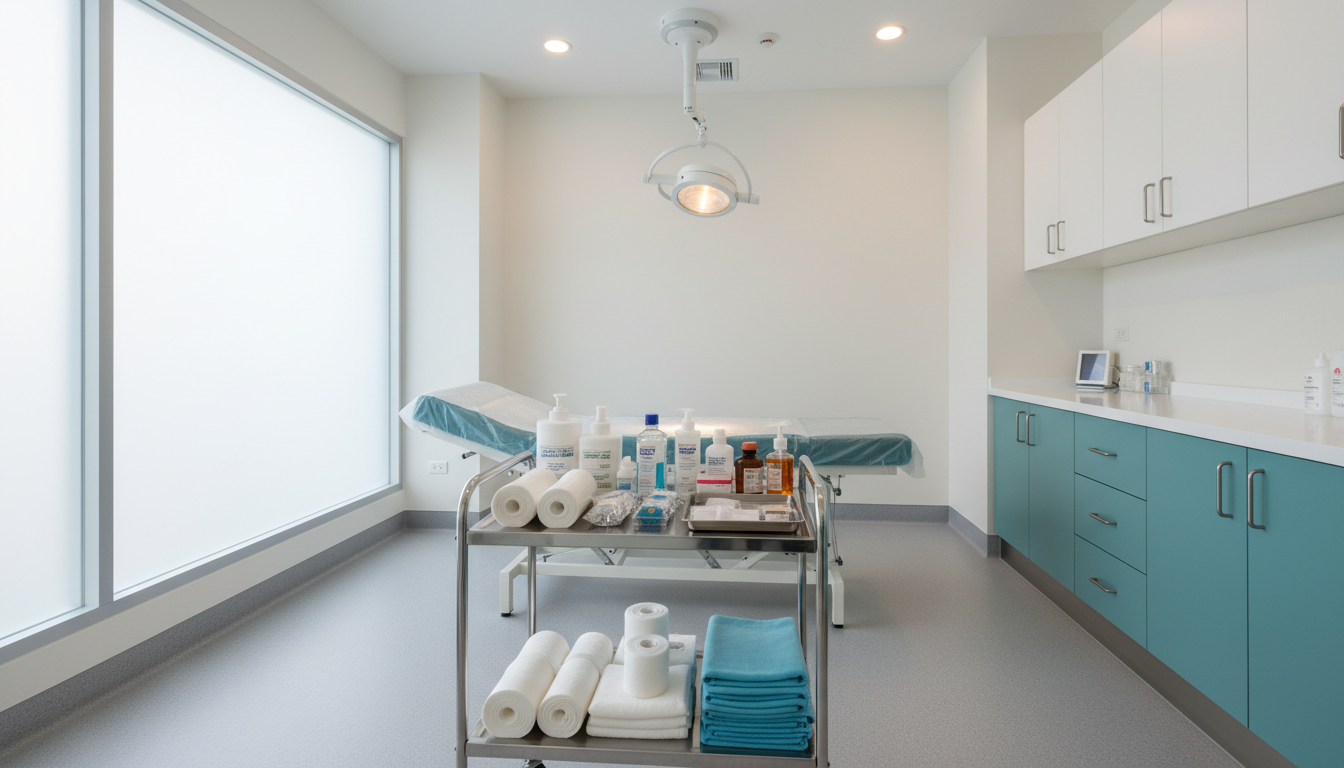
Wound care is the bread and butter of accident work. Our clinic offers full lacerated wound cleaning, debridement of road grit, topical and infiltrative local anaesthetic, suturing with absorbable or non-absorbable material as appropriate, skin glue and adhesive strips for face and small wounds, tetanus booster vaccination, and post-care instructions written in English. Stitched wounds are reviewed at 24 to 72 hours and the sutures removed at the right interval for the body part. See our wound dressing and suture removal service pages for more.
Soft tissue and joint injuries are assessed with focused examination and on-site clinical decision rules (Ottawa ankle, Ottawa knee, Canadian C-spine where applicable). We arrange same-day X-ray imaging at a partner facility within walking distance when fracture is suspected. Simple, undisplaced fractures of the wrist, hand, foot, or rib are immobilised with a splint, sling, or buddy strap and reviewed at the right intervals. Displaced fractures, joint dislocations needing reduction under sedation, and any suspicion of open fracture are referred to Bumrungrad, Bangkok Hospital, or Samitivej for orthopaedic care.
Minor burns (first-degree and small second-degree burns under 5% body surface area, not involving the face, hands, feet, or perineum) are cleaned, dressed with hydrocolloid or silver-containing dressings, and reviewed. Burns involving airway, face, joints, or larger surface area are referred. Minor head injuries without loss of consciousness, persistent vomiting, or neurological signs are observed and educated for red-flag symptoms; anything more serious goes straight to CT imaging at a tertiary hospital.
How a clinic visit works
A registered Thai medical doctor will take a brief history of how, when, and where the injury happened (mechanism of injury matters more than most patients realise), check vital signs, examine the injured area and adjacent joints and nerves, identify any red-flag features, and start treatment. Pain relief is given early. Wound photographs are taken for medical records and, where requested, for insurance claims. We complete English-language medical reports and police-form documentation that international travel insurers and embassies typically request, and we coordinate directly with insurers where possible.
For patients staying in a hotel who cannot easily travel to the clinic, we offer in-room doctor visits across central Bangkok. For patients who arrive dehydrated, shocked, or with significant blood loss, we have IV drip therapy on site to stabilise before transfer if needed.
Hospital referral, what triggers it
We have a low threshold for referring patients with any of the following: any loss of consciousness, however brief; persistent vomiting after head impact; severe headache, drowsiness, or confusion; penetrating injury to the chest, abdomen, neck, or eye; open fracture or bone deformity; suspected spinal injury after a fall or collision; large or deep burns; rapidly expanding bruise or swelling; signs of internal bleeding (rising heart rate, falling blood pressure, pale skin); injury during pregnancy; or any injury in patients on blood-thinning medication. The clinic has partnerships with the major international hospitals nearby and can arrange ambulance transfer when needed.
Recovery, follow-up, and rehabilitation
Most minor injuries follow a predictable recovery process. Wounds that are sutured cleanly typically heal at 7 to 14 days depending on body part. Simple sprains improve over 2 to 6 weeks with rest, ice, compression, elevation, and graded mobilisation. Simple non-displaced fractures take 4 to 8 weeks to clinically unite in adults. The clinic provides follow-up review, dressing changes, suture removal, and re-imaging where indicated. For patients who need rehabilitation (post-fracture, post-soft-tissue injury, post-surgical), we refer to experienced physical therapy services in the Sukhumvit area that offer comprehensive recovery support in English.
Patients returning home before recovery is complete receive a written handover for their home doctor, including all procedures done, medications prescribed, and a recommended follow-up plan. Patients with significant injuries are advised about fitness to fly: untreated pneumothorax, fresh major fractures, recent eye surgery, and certain ear or sinus injuries are short-term contraindications.
Insurance, costs, and documentation
Travelers should bring travel insurance details to every clinic visit. We work with major international insurers and can issue itemised English-language invoices, medical reports, photographs, and incident summaries that insurers and embassies request. Patients without insurance pay on the day; the clinic provides a written estimate before any procedure. Costs at our clinic are typically a small fraction of equivalent care at a major international hospital, which is one reason expatriates often choose us for minor trauma even when fully insured.
When to seek urgent care
For severe trauma (head injury with loss of consciousness, suspected fracture with bone visible or limb deformity, heavy bleeding that does not stop with pressure, suspected spinal injury, chest or abdominal penetration, large burns), call our clinic immediately, dial 1669 for the Thai national ambulance, or proceed to the nearest hospital emergency department. For minor injuries during business hours, walk in or call ahead. Our emergency medical care page covers the full spectrum of acute presentations that we handle as a community urgent-care provider.
Frequently asked questions
Do I need a hospital for a scooter injury? Not always. Most road rash, simple lacerations, sprains, and minor fractures are best handled in a well-equipped primary-care clinic. Hospital referral is reserved for serious mechanisms, suspected internal injury, or displaced fractures.
Can you provide an insurance report? Yes. We routinely issue English-language reports, itemised invoices, and clinical photographs that international travel insurers require for claims.
Will I need a tetanus shot? Probably, if your last booster was more than 10 years ago (5 years for a dirty wound) or you cannot remember. We give tetanus boosters at the clinic.
How long until I can travel home? Depends on the injury. Minor sutured wounds and most sprains do not delay flights. Significant fractures, recent surgery, fresh head injuries, and certain ear/sinus problems may need a fit-to-fly assessment.
Do I need physiotherapy? For most minor injuries, supervised home exercises are enough. We refer to physical therapy when injury severity, occupation, or sport demands it.
What if I am seriously hurt and unconscious? Bystanders should call 1669 for the Thai ambulance service immediately, and transfer to the nearest trauma centre. Our clinic does not replace a hospital emergency department for life-threatening trauma.
References
1. World Health Organization. Global status report on road safety, latest edition. who.int
2. National Institute for Health and Care Excellence (NICE). Head injury: assessment and early management (CG176, updated 2019).
3. Stevens DL et al. IDSA practice guidelines for diagnosis and management of skin and soft tissue infections, 2014 update.
4. Stiell IG et al. Ottawa ankle and knee rules: original publications and systematic review of clinical decision rules in acute musculoskeletal injury.
5. American Burn Association. Burn referral criteria, latest revision. ameriburn.org
6. Thai Ministry of Public Health / Erawan Medical Information Center. Bangkok emergency response protocols, current edition (1669 ambulance service).
Medically reviewed by Dr Ponlawat Pitsuwan, MD.
Need urgent care in Bangkok? Call +66 62 674 6771 or WhatsApp +66 95 073 5550. Book now
Take Care Clinic, Sukhumvit Soi 13, Bangkok.