Need urgent care in Bangkok? Call +66 62 674 6771 or WhatsApp +66 95 073 5550. Book now
Take Care Clinic, Sukhumvit Soi 13, Bangkok.
Swimmer’s ear, known medically as otitis externa, is a painful infection of the outer ear canal that thrives in the warm, humid Thai climate and is one of the most common reasons travelers and divers come into Take Care Clinic in Sukhumvit. Pain, itching, hearing change, and a sense of fullness usually start within twenty four to forty eight hours of pool, sea, or shower water trapping bacteria in the canal. Treatment with cleaning, prescription drops, and pain relief gives most patients relief within forty eight hours. Medically reviewed by Dr Ponlawat Pitsuwan, MD.
What Causes Swimmer’s Ear
Swimmer’s ear is an infection of the skin lining the outer ear canal, which runs from the visible part of the ear inward to the eardrum. The American Academy of Otolaryngology and the CDC describe how trapped water softens the canal skin, washes out the protective wax layer, and lets normal skin bacteria such as Pseudomonas aeruginosa and Staphylococcus aureus overgrow. The infection can also be fungal, especially in patients with diabetes, immunosuppression, or repeated antibiotic drops. Bangkok pools, the Gulf and Andaman seas, and humid hotel air conditioning all contribute. Aggressive cleaning with cotton buds is another major cause, because it removes protective wax and may scratch the canal skin, opening the door to bacteria.
Typical symptoms include pain that worsens when you tug on the outer ear or push on the tragus, itching deep in the ear, reduced hearing, a feeling of fullness, and sometimes a clear, white, or yellow discharge. Pain may radiate to the jaw, neck, or temple. Severe swelling of the canal can close it almost completely. Fever is unusual; if present it raises concern for spreading infection or otitis media in the middle ear behind the eardrum, which is a different problem.
Examination and Diagnosis
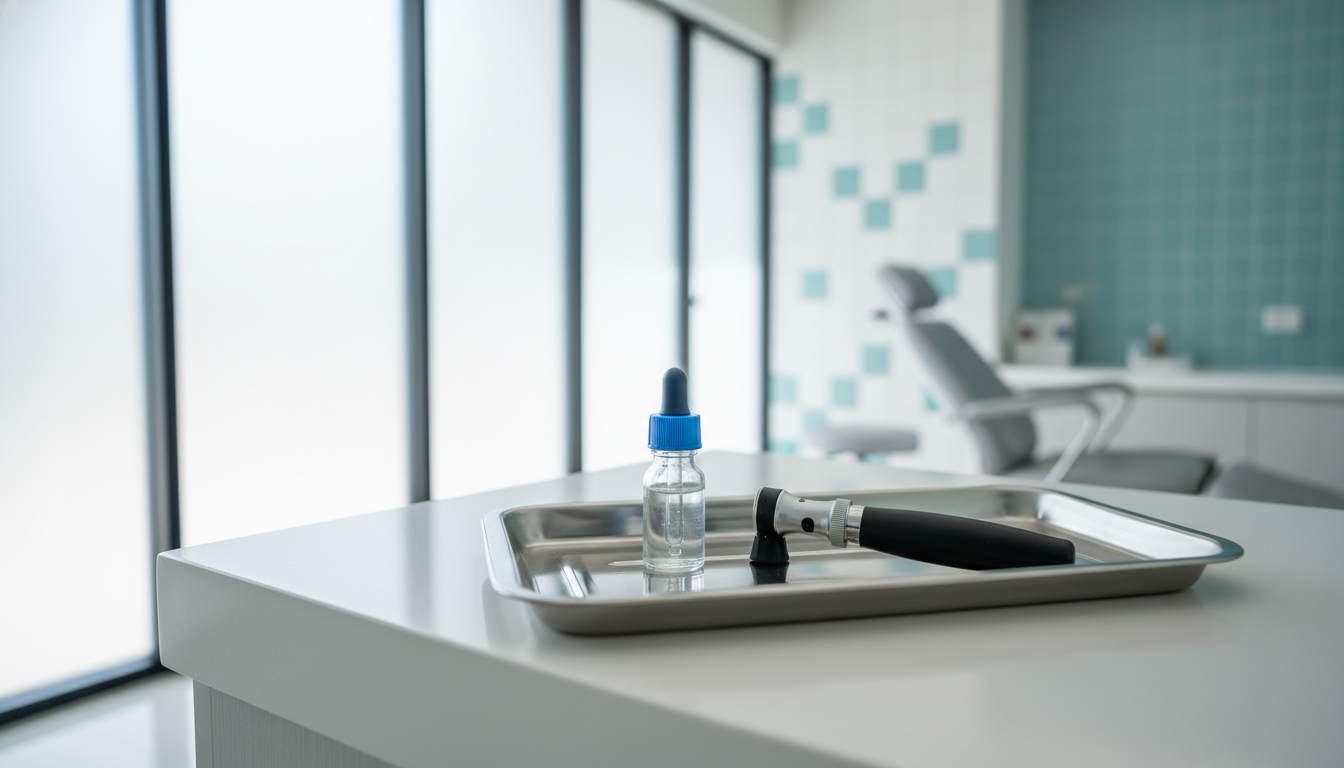
Our doctor examines the canal with an otoscope, looking for redness, swelling, debris, and discharge, and to check that the eardrum is intact. We grade the severity, look for fungal hyphae or black spores that would change the treatment, and rule out otitis media. Patients with diabetes, severe pain out of proportion to physical signs, granulation tissue at the bone cartilage junction, or facial nerve weakness need urgent assessment for malignant otitis externa, a serious infection that needs hospital admission and intravenous antibiotics. If we cannot see the eardrum clearly because of debris, we may proceed to gentle ear cleaning, called aural toilet, under direct vision in the clinic.
Treatment at Take Care Clinic
The cornerstone of treatment is topical antibiotic drops applied directly into the canal. We use ciprofloxacin with or without a steroid such as dexamethasone or hydrocortisone as first line, since these have excellent activity against Pseudomonas and reduce swelling within hours. NICE, the AAO, and the CDC all support topical antibiotic drops as first line over oral antibiotics, because the drug concentration in the canal is many times higher than anything achievable by mouth and side effects are far fewer. Drops are typically used four times a day for seven to ten days. We coach patients on correct technique, including lying on the unaffected side for two minutes after instilling drops so the medication reaches the deeper canal. If the canal is so swollen that drops cannot penetrate, we place a small expandable wick to deliver the medication and remove it at follow up two to three days later.
Cleaning the canal is often as important as the drops. Our doctor uses a microsuction probe or fine instruments to gently remove debris, wax plugs, and discharge. This single intervention can shorten recovery by several days and lets the drops reach the infected skin. Pain relief with paracetamol and ibuprofen is reliable and we may add a short course of stronger analgesia for severe cases. Patients should avoid swimming, pool water, and the sea for at least seven to ten days, and keep the ear dry during showering by using a cotton ball coated in petroleum jelly as a temporary plug.
Oral antibiotics are reserved for patients with spreading infection beyond the canal, immunocompromised patients, diabetics with severe disease, or suspected malignant otitis externa. We add ciprofloxacin or amoxicillin clavulanate when these criteria are met. Fungal otitis externa, which presents with characteristic black or white spore growth, is treated with cleaning and antifungal drops such as clotrimazole. We refer to a partner hospital ENT service when severe disease, recurrent infection, or red flag features are present.
Divers, Surfers, and Frequent Swimmers
Divers and frequent swimmers are at much higher risk. We see many patients from Koh Tao, Phi Phi, and Phuket who develop ear pain during a dive holiday. After completing treatment, ongoing prevention matters. Use a vinegar and rubbing alcohol mix of equal parts, two drops in each ear after every swim, to acidify the canal and evaporate residual water. Avoid cotton buds entirely. Use well fitted ear plugs designed for diving. Treat any flaking skin, eczema, or allergic dermatitis that affects the canal, as these are major risk factors. We provide a written prevention plan at every visit and can issue a fit to dive letter once the canal has healed, usually after one to two weeks. Diving is not safe while treatment is active, regardless of how good the pain control is.
Hotel Visit for Ear Pain
If severe pain, swelling, or hearing change makes it hard to leave your hotel, our doctor hotel visit service brings the otoscope, drops, oral analgesia, and any oral antibiotics needed to your room. We cover Sukhumvit, Silom, Sathorn, Riverside, and Asok hotels and most central Bangkok resorts. The doctor can also issue insurance paperwork and a follow up plan on the spot.
Related Conditions and Differential Diagnosis
If your pain is deep in the ear with fever, an upper respiratory infection, and a bulging eardrum, you may have middle ear infection rather than swimmer’s ear, covered at ear infection treatment. For ear pain without a clear cause, including referred pain from the throat or jaw, see ear pain treatment. For sore throat alongside ear pain see sore throat treatment and strep throat treatment. Sinus pressure causing ear fullness is covered at sinus infection treatment. For an infected eczema patch around the ear see skin rash treatment and cellulitis treatment. Fever workup is at fever treatment, and for allergy related canal swelling see allergy treatment.
Cost, Insurance, and Documentation
Our pricing for a swimmer’s ear consultation including canal cleaning and dispensed drops sits well below private hospital outpatient fees and is delivered in a single visit. We issue itemised English medical receipts that meet documentation requirements for Cigna, Allianz, AXA, April, Bupa, IMG, GeoBlue, World Nomads, SafetyWing, and most major travel insurers. We can also bill some policies direct and issue a fit to fly or fit to dive letter once you have recovered.
Frequently Asked Questions
Can I be seen in my hotel room? Yes. Our doctor hotel visit service covers Sukhumvit, Silom, Sathorn, Riverside, and most central Bangkok hotels. The doctor brings an otoscope, antibiotic drops, oral analgesia, and any oral antibiotics needed, and can issue paperwork on the spot.
Will my travel insurance cover this? Most international travel insurers reimburse acute care for swimmer’s ear. We provide itemised English receipts and clinical notes that meet documentation requirements for Cigna, Allianz, AXA, April, Bupa, IMG, GeoBlue, World Nomads, and SafetyWing. Direct billing is available for some policies.
How long until I feel better? Most patients have substantial pain relief within twenty four to forty eight hours of starting drops, and full recovery within seven to ten days. Severe or complicated cases may take longer and need ENT referral.
Can I swim or dive while on treatment? No. Avoid all water exposure to the ear for at least seven to ten days and until the canal has healed. We issue a fit to dive letter once recovery is complete.
Should I use cotton buds to clean my ears? No. Cotton buds remove protective wax and may scratch the canal skin, which is one of the main causes of swimmer’s ear. Keep the canal dry instead and let the body manage wax naturally.
Citations
CDC. Ear Infections from Swimming.
American Academy of Otolaryngology. Clinical Practice Guideline: Acute Otitis Externa.
NHS. Ear Infections.
Mayo Clinic. Swimmer’s Ear: Diagnosis and Treatment.
Cochrane. Interventions for acute otitis externa.
World Health Organization. Deafness and Hearing Loss.
Medically reviewed by Dr Ponlawat Pitsuwan, MD.
Need urgent care in Bangkok? Call +66 62 674 6771 or WhatsApp +66 95 073 5550. Book now
Take Care Clinic, Sukhumvit Soi 13, Bangkok.